Contact us
Wherever you are in the world, you can be a part of our vibrant learning community! Contact us with questions or to host your own event through Processwork Online

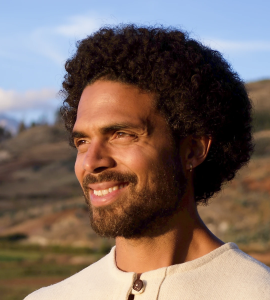
ALEXANDRE JODUN
In many animist cultures throughout time immemorial, it has been revered knowledge that our physical and imaginal bodies are – as interwoven expressions of Soul, Earth, and Mystery. Explore the art of somatic divination through dream-body exercises inspired by process-oriented and animist perspectives as a way to divine an important issue and/or topic in our lives.
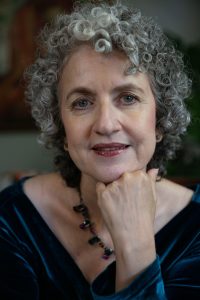
NIYATI EVERS
We live our lives as if the dead are separate from us, over there, in some other, far away, unreachable realm. We grieve our dead, we build beautiful altars, hold ceremonies and memorial services but what if our lives could be enriched by being in relation with our ancestors?

BILL SAY
The Life Myth can be likened to one’s dream of life, containing our deepest struggles and gifts, and may suggest our direction and meaning in life.
This class will (re)introduce you features of the Life Myth. You’ll practice the skill of symbolic thinking. We’ll use it to consider our own Life Myths, and how they provide context and framing for our aspirations, struggles, and more.
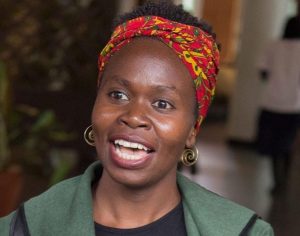
WANGUI WA KAMONJI
Embodied pathways to the pluriverse is a workshop exploring 5 frames of colonial modernity and their pluriversal regenerative alternatives. Together and through our bodies and the many stories they hold, we will map the logics that have created colonial modernity, and their many current harms in the world.
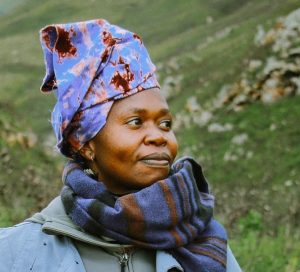
WANGUI WA KAMONJI
We explore powerful tools to help your clients feel safer, calmer, and more alive in their bodies through this transformative journey into nervous system healing. Learn practical, accessible ways to guide yourself and others from states of overwhelm, anxiety, or numbness into balance and vitality – all grounded in the body’s natural wisdom. This course aims to help your clients (and yourself) thrive in an increasingly challenging world.
WANGUI WA KAMONJI
We explore powerful tools to help your clients feel safer, calmer, and more alive in their bodies through this transformative journey into nervous system healing. Learn practical, accessible ways to guide yourself and others from states of overwhelm, anxiety, or numbness into balance and vitality – all grounded in the body’s natural wisdom. This course aims to help your clients (and yourself) thrive in an increasingly challenging world.
WANGUI WA KAMONJI
As more and more people become aware of their own trauma, or we encounter trauma material while facilitating, it has become more imperative than ever to be trauma informed. But what does that mean, and what does it require of us in how we facilitate or engage our own traumawork? In this session, Wangũi will guide us in awareness of various nervous system responses that are pertinent in the course of traumawork.
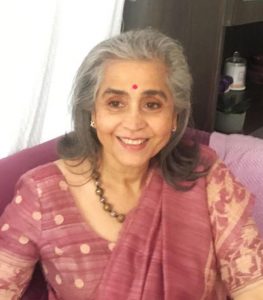
KALPANA TANWAR
The primary tool of the therapist is the self. Unless the therapist has worked on their own personal issues like prejudices, traumas, and mind-sets to name a few, they cannot be efficient practitioners.
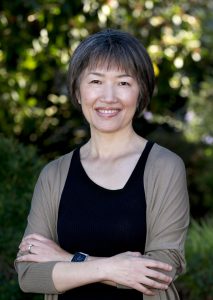
AYAKO “AYA” FUJISAKI
In my practice and in my personal work, focusing focusing on self-criticism alone is not enough. Many people need some guidance on how to build “self-love muscle” to lead truly fulfilling lives.
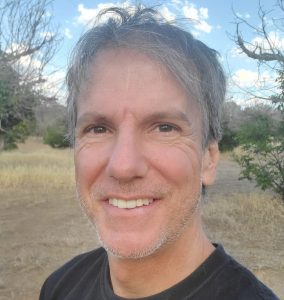
WILL HALL
A crash course on psych medication essentials that you can bring directly into practice right away.
VICKI HENRICKS
Your authentic self shapes your coaching impact. This isn’t about fitting into a prescribed coaching model – it’s about discovering how your unique life experiences, personal wisdom, and natural way of being create extraordinary value in your work.

LETICIA MENDOZA
Being able to create deep emotional bonds with others is not just a desire, it is also a need for survival. The challenge is that we all carry wounds in our way of relating to others. Some attachment wounds that we are not even aware of or that we have been dragging along as a transgenerational burden. In this course we will explore an overview of process-oriented relationship work and attachment theory, so we can have more resources to understand and work on our everyday relationship dynamic
LETICIA MENDOZA
Explore how the mystic of Processwork integrates our inner and outer worlds, and gives us means and tools to follow our very personal and deeply intimate search for the divine mystery, the ultimate reality, one’s own essence
ALEXANDRA VASSILIOU
Relationships are personal, professional & social. Relationships are personal, professional & social. Across all the diverse relationships we have, what we bring to it is our attitude.
WANũI WA KAMONJI, MSc
Can conflict make you feel warm & fuzzy? Conflict is uncomfortable, it’s scary. But conflict can be transformed into helpful feedback, and giving and getting feedback transforms relationships. In her warm, supportive way, Wangũi shows us how to give feedback that is transformative and healing.
ALEXANDRA VASSILIOU
Professionals in the field are faced with unbearable challenges, often reaching burnout at a faster rate than before. Team-building and supervision meetings have offered a space for a deeper understanding of the dynamics influencing the field and the connection between personal, relationship and community experiences. During this online meeting, after I present the situation in Greece and what I have learned to be helpful so far.

SERGEY BAYEV
Learn to work with anger using process work skills. Let’s explore together how we dream up each other into near-extreme states of consciousness. And how we could master a new trajectory through such a strong gravitation field.

BILL SAY, MA.
The Life Myth can be seen as an overarching dream or pattern of life. Like many dreams, the Life Myth presents itself but is not necessarily understood, and yet has the potential to help us understand our lives if we can listen to it on its terms.
DAVID BEDRICK, PH.D.
Dieting, shame, and the (unexpressed) wisdom of the body. David draws on his decades of work to synthesize key insights for working with body image issues in modern society.
AYAKO “AYA” FUJISAKI, PH.D.
Using Processwork and KonMari Method to Cultivate Self-love. Aya adds important updates to the traditional Processwork model of working with inner criticism.
WANGũI WA KAMONJI
Questions are fertile arenas for culture shifts, especially when they are connected to our deep feeling senses.

MATT STELLA, LICSW, Dipl.PW
The ways that men develop a masculine gender identity often create edges to vulnerability, being dominated, or asking for help.
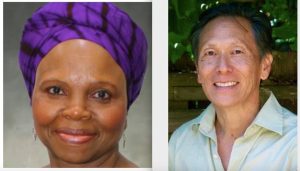
ZED XABA, M.A. & BILL SAY, Dipl.PW
Internalized Oppression can depress, limit or destroy our well-being, empowerment and meaningful engagement with life.

CATHARINE MACDONALD
You might know your inner child, but have you met your inner parent? Who is the part of you that supports your growth and cheers you on? We often get to know our inner child, but don’t always explore who parents that child, and who parents us, as grown ups! We never outgrow the need for a mother or father. But our parents might not be there for us, physically, emotionally or relationally. Where do we turn?
CATHARINE MACDONALD
One of the most useful concepts in Processwork is process and how it reveals aspects of our identity and is a useful tool to grow.

KATE JOBE
How to better use your body to get a sense of your client’s experience, clarify your own movement expression, and identify the quality and characteristics of movement.
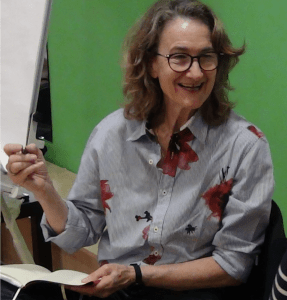
KATE JOBE
How does movement travel in space? What happens in the body? Explore movement & space and see how it changes state. In this class we will practice common simple forms of movement that originate in the Laban/Bartenieff Movement System. We will focus on getting familiar with space as it moves inside and the vast infinite spaces outside of us.
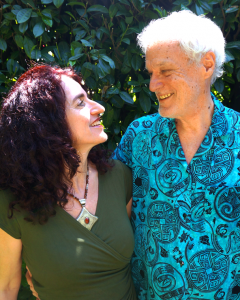
NIYATI EVERS & ROBERT KING
The more grounded we are in our self-awareness around our own sexuality, the more we can shape our erotic experiences.
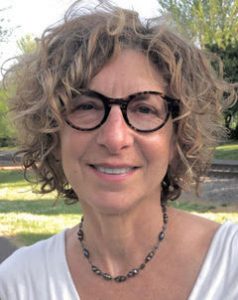
JAN DWORKIN, Ph.D.
Shares her insights about working with intersectional power dynamics in couples. How can we understand more about our own power and use it well in relationship?

LANE ARYE, Ph.D.
How to integrate the most effective tools of trauma therapy with Procsswork.

ANA RHODES.
Many times when I am in the midst of facilitating a very painful relational conflict or collective group situation, I feel that all I have to do is give myself freely to the situation and all its parts. In that moment Nature is my Ally.

CONOR McKENNA.
What might remain that could not be
dropped or taken away?
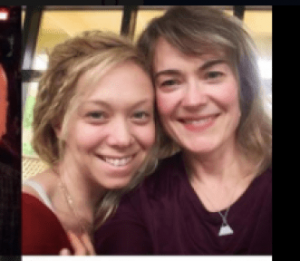
CATHARINE MACDONALD & MARAYA KARENA
What do you get criticized for?
Whatever it might be, criticisms often point to our greatest strengths.
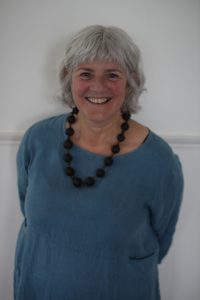
MICHELE O’BRIEN
Many of us in helping professions feel depleted and overwhelmed.
Rejuvenate and rediscover the passion that first ignited you. We will look at the allies, blocks, and resources that might be in the way or available to you.
LETICIA MENDOZA
In short, Dreaming is the mystical source of reality. How can we consider the need of our cognitive mind “to know”, to have clarity, to understand structure
and at the same time, be able to let the Dreaming guide us?

ERROL AMERASEKERA
Explore how we can apply our Process Work skills and methodology within a context of organisational development, particularly when working with leadership, culture and performance.

LIZ SCARFE
How to integrate Processwork techniques with trauma-informed principles. In this seminar, we’ll explore key aspects of the Process Work model that we can draw on to create safer-spaces and how to integrate these with trauma-informed principles.
KALPANA TANWAR
How can we better manage change in groups, organizations, and larger geographical areas?
What are the skills and techniques we can cultivate in ourselves to direct and support these change moments?

RAGGI KOTAK
This seminar is an opportunity to consider the dynamics of racism and trauma, and how they interlink.
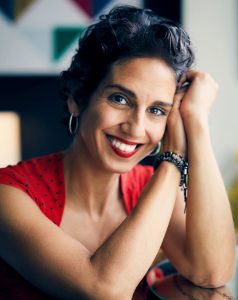
ANNAHID DASHTGARD
I’ve come to realize that we could all use more skill in the area of belonging — to better understand what it means, the impact of its absence, and how to create it for ourselves and each other.

TIM BERTHOLD
How can we bring a compassionate, process-oriented perspective into large social service organizations?

GARY REISS, Ph.D.
Many of our most chronic body symptoms, emotional problems, relationship and world issues shift when we work with the ghosts of history.
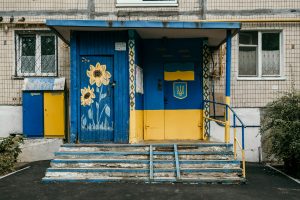
ANTON YERMOLENKO, SERHII RIABCHUK & YULIYA FILIPPOVSKA
What do you do when there is no “right” choice? If staying means fighting for your country, but living in a war and maybe dying? And leaving means keeping you and your family alive?
Three facilitators in Ukraine were in that position when the war started. They started facilitating group processes for Ukrainians in Ukraine and abroad. It’s been three years, and they haven’t stopped. In this course, they will share their life experiences as individuals and a team.
LANE ARYE
Even when our thinking minds are on board, we white people often get defensive in tough racial conversations (or even normal conversations with People of Colour).
This experiential workshop is a chance to notice our visceral and emotional defensiveness, and to learn & try simple and powerful practices to help us move toward racial resilience.
DIANE WONG & JORDANA HART
Join Diane Wong & Jordana Hart for an interactive deep dive into the anti-racism journey and how Process Work/Deep Democracy can propel anti-racism work in the U.S. and internationally.
RHO SANDBERG
Do you imagine using your skills with organisational leaders, teams and employees, but struggle to describe what you do, and how it will help?
Or, do you want to expand your client base & offerings?
Learn how to present your skills in a way that resonates with clients from one of the leading Process-oriented coaches in the world.
RHO SANDBERG
Whether you are an experienced organisational coach, executive coach or are interested in entering this field, join us to learn and share more about the growing field of Processwork in organisations.
LANE ARYE, Ph.D.
From individuals to organizations, and everything in between, Lane will model a profound way of working with privilege from a Process-Oriented tool box.
KATE JOBE, Dipl. PW
Power and rank, used well are powerful allies, bringing a sense of wellbeing and even safety.

NONTOKOZO CHARITY SABIC
Racism was done and it can be undone through effective community, individual and institutional change.
PAUL LEVY
The revelations emerging from quantum physics are a doorway into the dreamlike nature of reality, which has enormous implications for our day-to-day lives.
ANURADHA DEB
Sharing her personal experiences with audience participation, Anuradha will explore how through centuries, oppression has only changed its face and not its intensity.
ANURADHA DEB
Our bodies hold a wealth of knowledge beyond our conscious awareness. They are constantly communicating through sensations, symptoms, and movements. Arnold Mindell’s concept of the Dreambody suggests that our physical experiences are intrinsically linked to our unconscious mind, our dreams, and our deepest selves.
CATHARINE MACDONALD
Learn about those, how neurodiversity comes out in therapy, and what the strengths are of having a brain that works a bit differently from everyone else.

IRINA FEYGINA
How can we draw on processwork to support the transformation of our world, our organizations, and ourselves amidst this immense challenge?

PIERRE MORIN, M.D.
Transforming your relationship with your body, health & community

ALA’ HAMMATTAH
Shares current research on the Intersection of Islam and process work.
PAUL LEVY
We exploring two fundamental aspects of reality: the Indigenous concept of wetiko (the mind-virus of apparent evil) and the non-dual nature of ultimate reality. These seemingly contradictory perspectives coexist, each true on its own level of reality. Understanding this paradox is key to navigating our complex human experience.
PAUL LEVY
How to alchemically extract the healing remedy from the poisonous mind-virus known as wetiko through creativity.
ALA’ HAMMATTAH
Exploring the deeper aspects of Process-oriented research.
CAMILLE DUMOND
Exploring our families migration journeys, including the processes of assimilation, loss and aspiration.
LIZ SCARFE
As a facilitator or presenter working with groups, you can assume there WILL people in your groups who has experienced trauma: someone being “triggered” in your group is more a matter of WHEN, not IF. This course is essential for leaders, teachers, facilitators and organizers.
KAS ROBINSON
Addictions are a core problem in our world and are rarely discussed. This presentation, demonstrates non-pathologizing process work methods for working with addictive tendencies.

JULIAN JARAMILLO
What is the contribution that all of these developments can (and should) have in Processwork? How can current understanding of trauma help us as processworkers to be more effective therapists?
KALPANA TANWAR
Do you wonder why your life plans and your life process are not always in sync? This workshop will give us a glimpse of our life purpose and design.
WANGUI WAS KAMONJI
What does it look like to walk in my purpose from an indigenous and decolonial lens? In this short course we’ll explore and engage a relational paradigm with all life to support our inquiry into our life paths, purpose or myth.
DAVID BEDRICK
Everything Unfolds and Flowers: That’s How we Heal Shame. In this course we will look at the etiology of shame and it’s connection to abuse, how sensory grounded experience heals shame and how we can shift our understanding of the role of shame in trauma experiences.

MARAYA KARENA, INGRID ROSE, HELLENE GRONDA
Innerwork involves paying close attention to the present moment, especially the emotions, thoughts, and behaviors that arise within one’s internal experience. The skill is in learning how to use this awareness to facilitate growth and transformation.
MICHELE O’BRIEN
How to skilfully set goals with a client, from an embodied, deeper place. Collaboratively find what the client wants to work toward. Give your sessions structure, and use the structure of the therapeutic relationship to help establish these goals.

INGRID ROSE
We generally perceive experience on the level of an everyday understanding that goes along with our primary identities. However, there are parallel experiences that co-exist with the consensus reality level that hold information for us with which we are not usually so familiar.
ANA RHODES
Ana Rhodes brings her decades of facilitation experience to showcase facilitating a relationship process. There will be a live work with a real two-party conflict followed by analysis of process structure and time for questions and answers.
NIYATI EVERS & ROBERT KING
In this course, we will take on both the challenge and opportunity in long-term relationships. To keep the spark and magic of sexuality alive in the long-term, we have to engage in a process of ongoing discovery and re-discovery, of both self-confrontation and self-disclosure.
A process-oriented look at family work to understand the simultaneous levels, how to work with edges and what to focus on as a facilitator. In this course, we will look closely at common issues that arise when working with families.

MARAYA KARENA
How can you support yourself and the women+ you work with towards healthy conflict? People who have been socialized female carry unique edges when it comes to entering conflict. How can we connect with the deeper knowing beneath the dynamics and bring it out?

MARAYA KARENA & RO HANUS
As we delve into the realm of astrology and processwork, we journey through the depths of the collective unconscious, uncovering the archetypes and patterns that shape our lives.

JOE GOODBREAD
Process is the essence of change – it flows along regardless of our attempts to pin it down to fixed structures and objects. Process work implies facilitation of process – recognizing what is changing, valuing the direction it is going, and helping it get there.

HELLENE GRONDA
Get friendly with Marketing. Processworkers face two particular marketing challenges that can really block us. Understand these challenges and avoid the 2 most common mistakes we make when trying to ‘get the word out’.
CATHARINE MACDONALD & WERONIKA PIELAS
Relationships require inner and outer skills, and lots of practice. As good friends and colleagues, we want to share what we love to do – learn to be better at relationships.
DAWN MENKEN, Ph.D.
In this course, we will look closely at common issues that arise when working with families. Some learning areas we will address include:
DAWN MENKEN, Ph.D.
This course will help to support parents to have better relationships with the growing children in their lives, and how to address difficult topics like sexuality, drugs, alcohol, contraception, gender identity, abortion, suicide, and activism.
NIYATI EVERS & ROBERT KING
In this course we focus on getting to know your erotic landscape and developing a more conscious relationship with your sexuality. The more grounded we are in our self-awareness around our own sexuality, the more we can shape our erotic experiences.
MARAYA KARENA, PW DIPL.
Sometimes even getting down to an idea of what you want in sex and relationships is the hardest part. At the same time, taking time to get in touch with what you want can be one of the places of rich and rewarding self-understanding. This course offers you detailed process-oriented exercises to get down to the truth of what you want and offers structured communication models for how to ask for it.
MARAYA KARENA
In this experiential workshop, we’ll explore how your birth chart reflects the myth you are living. Just as the planets trace patterns across the sky, our inner worlds follow meaningful, symbolic paths that can be revealed and reclaimed. Expect guided reflection, embodied exercises, and intimate inquiry into the mythic threads that move through you.
MARAYA KARENA<br>
Anima and animus.
These are the often split-off feminine and masculine archetypes shaping desire, attraction, projection and inner conflict.
Through the lens of astrology, we identify how these archetypal energies appear in what you idealize, crave, resist or feel magnetized toward in others and in life itself.
Then, using Processwork, we work with these forces as living parts of your psyche seeking relationship and integration.
NIYATI EVERS & ROBERT KING
Wherever we turn these days, there is some form of profound heartbreak and loss. Death is happening on multiple levels, and in multiple ways – it is the river we swim in. Since death is all around us; how can we engage with that process of ‘death and dying’ in a way that deepens our lives and our relationships and our sense of meaning?
WILL HALL, PW DIPL.
Ethical scandals, research misconduct, and patient backlash are now a small – and growing – part of the “psychedelic revival.”
Jung’s own views on psychedelic risks are widely disregarded and mis-appropriated. In practical and accessible terms, what does ethical harm reduction work with these unpredictable substances look like?

MAX SCHUPBACH
Join the cutting edge of Deep Democracy! The Pluriverse approach is a network and theoretical discussion how various decolonization processes and initiatives can support and enhance each other, even if one of them might seems contradicting the other. The Pluriverse approach was developed/is being developed, focusing on various decolonization processes across diverse cultures and communities.

MIGUEL VAZQUEZ DE MERCADO
Culture doesn’t change, it EVOLVES. Within organizations and groups we tend to thing about change as something that comes from the outside, or is internally driven. Changes require the organization to adjust, and modify it’s culture.
WILL HALL, PW DIPL.
Today’s overhyped growth market for psychedelic “therapy” is dominated by unexamined assumptions that are flawed — and dangerous. Together we will rethink the “psychedelic renaissance” from a Jungian and Process Work perspective.
DIANE WONG
How can Process Work and Deep Democracy propel anti-racism work in the U.S. and internationally? In this course, we look closely at the legacy of racism and how to use the dreaming level to burn our wood and become better equipt to navigate and facilitate the field around race.
JOE GOODBREAD
Hierarchies of power and privilege are an inescapable consequence of society. Cultivating awareness of the process of rank can free us from the pessimism of seeing our rank as a fixed structure to overcome.
ANA RHODES
What Leads us is THE WHOLE SOUP: The Dreaming field, the interplay of roles and ghost roles, history and the future, the tensions of polarisations, the instability of hotspots, the diversity of needs and experiences. These are the points that mobilize us in conflict to discover creative pathways towards love.
BILL SAY
This course introduces Process Work theory that concerns human diversity especially suited to work with differences and conflicts. We’ll take time to explore our own contexts: relationship, family, clinical setting, team, organization, community or social movements.
ANA RHODES
Breaking free from inner and outer oppression is a political, social and community task. It is also a deeply psychological and spiritual one. It takes courage and compassion to break the cycle of violence. We need to recover a meta position that has the ability to notice, reflect on and communicate impact.

